
English| EUR
Suggested for you
More currencies
Choose a language
A two-day journey to Zagora compresses the Saharan experience into a manageable timeframe from Marrakech. The route crosses the High Atlas, descends through the Draa Valley, and reaches the desert threshold where overnight camps and camel excursions await. This guide walks through the logistics, schedule structure, and what each segment of the trip delivers.
Quick answer
The zagora desert 2 days itinerary typically follows a Day 1 departure from Marrakech at 08:00–10:00, crossing Tizi n'Tichka pass and the Draa Valley to reach Zagora by late afternoon for camel trekking and desert camp overnight. Day 2 returns via the same route with stops at kasbahs and palmeries, arriving back in Marrakech by evening. The desert area itself has free public access with no entrance fee, though organized tours bundle transport, accommodation, and meals into a single package.
The two-day Zagora itinerary is structured around a single overnight in the desert, a format designed for travelers with limited time who still want the essential Saharan experience. Day 1 begins with an early morning departure, typically between 08:00 and 10:00, to capitalize on cooler temperatures and maximize daylight hours for the outbound journey. The route from Marrakech climbs through the High Atlas via the Tizi n'Tichka pass at 2,260 meters, descends into the Draa Valley's ribbon of green palmeries, and terminates at the Zagora desert threshold by mid-to-late afternoon. The drive spans approximately 360 kilometers one way and takes seven to eight hours with standard photo and meal stops at Ait Benhaddou or Ouarzazate. Upon arrival in Zagora, the itinerary shifts to the desert experience itself: a camel trek of 60 to 90 minutes into the dunes or desert plains, arrival at a fixed tent camp as the sun sets, and an evening of Berber music, tagine dinner, and overnight under canvas or open sky. The Zagora region lies at the edge of the Sahara proper, where the landscape transitions from rocky hammada to low sand formations. It is not the towering erg dunes of Merzouga, but the accessibility trade-off makes the zagora desert 2 days format viable when Erg Chebbi's additional distance is prohibitive. The camps range from basic Berber-style setups to semi-permanent operations with private tents, shared dining areas, and rudimentary facilities. No formal entrance fee applies to the public desert area, though all services—guide, camel, camp, meals—are contracted through tour operators. Day 2 reverses the route after sunrise and breakfast at camp. Departure from the desert typically occurs by 08:00 to allow the return drive to Marrakech before nightfall. The second day often incorporates stops that were bypassed on the outbound leg: the Taourirt Kasbah in Ouarzazate, a cooperative visit in the Draa Valley, or a pause at the Agdz palmery. The return journey covers the same High Atlas crossing, with arrival in Marrakech by 19:00 to 20:00 depending on traffic and stop duration. The compressed timeframe means each segment is tightly scheduled, with limited flexibility for extended exploration at any single location. Travelers seeking deeper immersion in the dunes or multi-night desert stays typically opt for three-day formats or Merzouga-focused itineraries. The zagora desert 2 days structure prioritizes the round-trip feasibility and the symbolic overnight under the stars, condensing the Saharan narrative into a brief but tangible encounter. For visitors with a week or less in Morocco, it delivers the desert checkpoint without requiring the full commitment of longer southern circuits.
“The two-day Zagora itinerary compresses the Saharan experience into a single overnight, prioritizing accessibility over the deep-desert immersion of longer formats.”
This itinerary suits travelers departing Marrakech or Ouarzazate who want a condensed desert experience with camel trekking and a night under canvas. The full loop spans two days with one overnight in the dunes.
Leave early to cross the High Atlas via Tizi n'Tichka pass, stopping at Aït Benhaddou kasbah for photos. The drive to Zagora takes roughly seven hours with breaks.
Reach Zagora by mid-afternoon, meet your guide, and ride camels into the dunes for one to two hours. Sunset views mark the transition to camp.
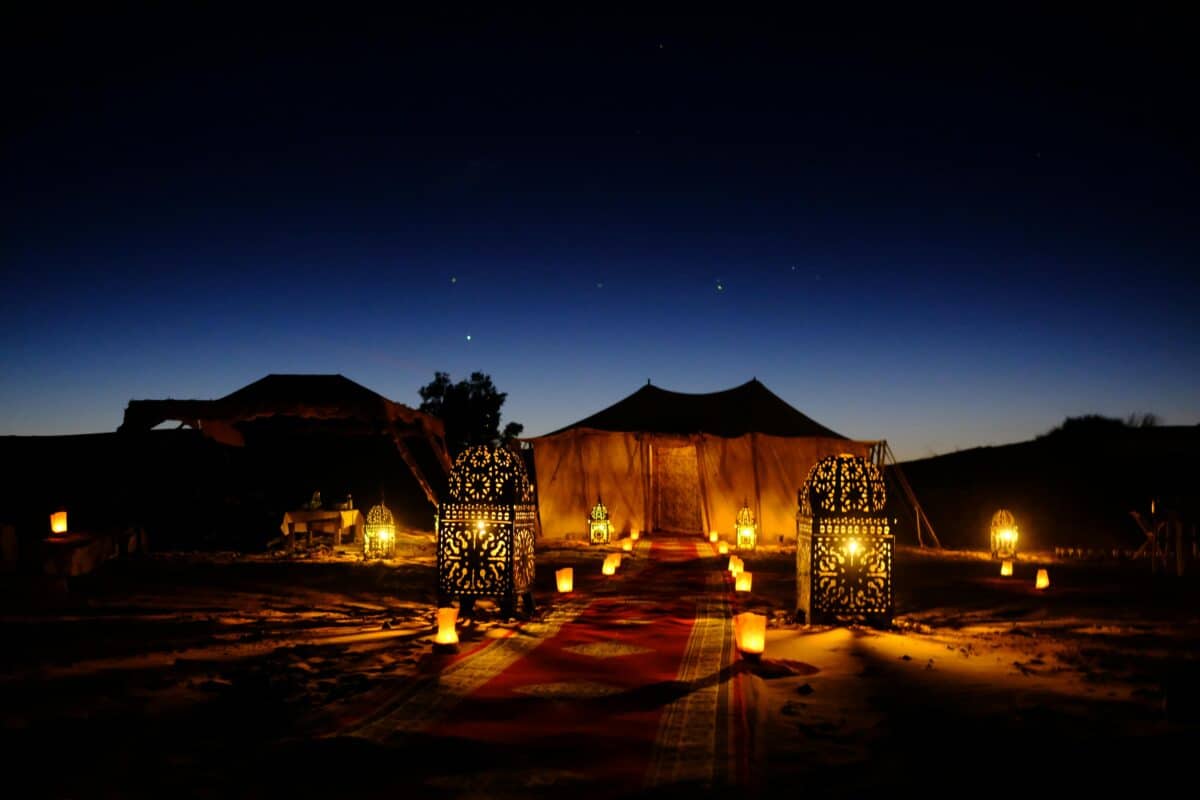
Settle into a traditional Berber tent, share dinner around the fire, and sleep under open sky or canvas. Temperatures drop sharply after dark, so layering is essential.
Wake before dawn to watch the sunrise over the dunes, then ride camels back to the meeting point. Breakfast is served at the camp or upon return.
Depart Zagora mid-morning, retracing the route through the Draa Valley and High Atlas. Arrive in Marrakech by early evening, completing the circuit.
The Zagora Desert is located in the Draa-Tafilalet region of Morocco. Most travelers reach the area by road from Marrakech via the Tizi n'Tichka pass in the High Atlas Mountains.
N9 road from Marrakech via Ouarzazate
Supratours or CTM from Marrakech to Zagora
Grand Taxi from Marrakech to Zagora
Plan your arrival for the best arrival window of 08:00–10:00 to avoid extreme midday heat and secure cooler morning temperatures for travel. Ensure your vehicle is capable of handling the winding roads of the Draa Valley.
The optimal period to visit the Zagora Desert is during the cooler months of autumn and spring, specifically from October to April. Adhering to the best arrival window of 08:00–10:00 is essential to manage heat exposure and ensure comfortable travel conditions.
Warm days, cool nights (20°C–30°C)
This period offers pleasant temperatures for desert activities before the summer peak.
Mild days, cooling evenings (20°C–28°C)
Autumn provides stable weather conditions suitable for traversing the Draa-Tafilalet region.
Cool days, cold nights (15°C–20°C)
Expect significant temperature drops at night, requiring appropriate preparation for colder desert conditions.
—
Arrival between 08:00 and 10:00 is recommended to avoid extreme midday heat and secure cooler morning temperatures.
Verdict: The best time for a Zagora Desert 2-day visit is during the months of October or April, utilizing the recommended 08:00–10:00 arrival window.
The Zagora Desert area remains accessible to visitors throughout the week. You may enter the public desert grounds at any time of day or night.
Pack strategically for two days in the desert to stay comfortable and safe across shifting sand terrain and temperature extremes.
Everything you need to know about zagora desert 2 days
A typical itinerary involves traveling from Marrakech through the High Atlas Mountains and the Draa Valley to reach the encampments near Zagora. You will experience sunset camel treks, traditional Berber music, and an overnight stay in a desert camp before returning the following day. This route is designed to provide an authentic glimpse of the Sahara landscape within a short timeframe.
The cost of a zagora desert 2 days trip varies significantly depending on the service provider, transportation, and accommodation level selected. While entry to the desert area itself is free, professional tours bundle logistics such as transport, meals, and overnight camp arrangements into their pricing structures. Always confirm what specific services are covered in your booking.
The best arrival window for your adventure is 08:00–10:00 to avoid extreme midday heat and secure cooler morning temperatures for travel. Starting early ensures a more comfortable journey through the winding mountain passes and valley roads. Proper timing is essential for maximizing your enjoyment of the desert environment.
Yes, the route to Zagora passes through the lush Draa Valley, a highlight for many travelers on a zagora desert 2 days adventure. The valley is known for its extensive palm groves and historic kasbahs which serve as a stark contrast to the nearby desert terrain. It provides a scenic transition between the mountains and the arid dunes.
Families often find the desert experience rewarding, provided they are prepared for the travel time involved in crossing the mountains. It is recommended to choose private transport for more flexibility with stops and children’s needs. The overnight camp experience is generally well-equipped to host guests of various ages.
A frequent mistake travelers make is underestimating the travel duration through the High Atlas Mountains. Rushing the journey can lead to fatigue, whereas planning for a steady pace helps travelers appreciate the changing geography. Proper hydration and adherence to the recommended morning arrival window are vital for a successful trip.
There is 0 MAD entrance fee for the public desert area. You can explore the landscape freely without needing to purchase an admission ticket to the dunes. Professional guides or tour operators may charge for their specialized services, but access to the location itself remains free.
The region is accessed via the road to Zagora in the Draa-Tafilalet province of Morocco. Most travelers depart from major cities like Marrakech by private vehicle or organized transport, navigating through the Tizi n'Tichka pass. Ensure your transport plans align with the recommended morning arrival window for safety.